


Principal Built Engineering provides industrial structural engineering services for factories, production facilities, warehouses, and logistics developments. Principal Built Engineering designs heavy duty structural systems capable of accommodating large spans, high loads, and specialised operational requirements. This includes warehouse structural design, mezzanine structures for tenant fit outs, industrial shelters, and structural systems supporting plant and equipment.
Sector-Specific Industrial Expertise
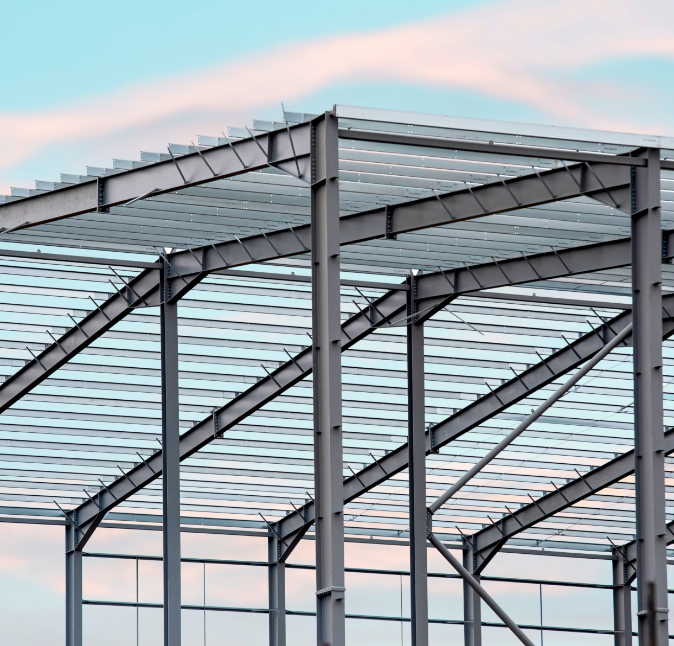
- Warehouse Design: From distribution centres to high-bay logistics facilities, the design covers cost effective portal frame systems, tilt up panels, long span roofs and column grids set out for racking and automation. Designs account for wind and earthquake loads and for roof mounted equipment.
- Factories & Production Facilities: Principal Built Engineering designs durable, flexible structures for manufacturing plants, food processing, assembly lines, and heavy industry. The design can include vibration isolated floors, crane runways, high-clearance framing, and robust foundations to handle machinery dynamics and point loads.
- Mezzanine Structures: Maximising vertical space without compromising operations is key. Principal Built Engineering designs steel or composite mezzanines for storage, offices, production platforms, or maintenance access. Each design allows for the live loads (for example pallet racking and machinery), fire separation, stair/lift integration, and minimal columns to preserve floor space below.
- Shelters: Structural engineering is provided for industrial shelters, canopies, truck loading bays, equipment enclosures, and covered storage. The design considers weather resistance, impact protection, and integration with site civil works like pavements and drainage.
- Monorails: Specialist design for overhead monorail systems, hoist beams, and crane supports to handle dynamic and torsional loads, deflection limits, fatigue considerations, and safe integration with building frames. Principal Built Engineering coordinates with equipment suppliers for precise alignment and compliance.
Capability to support industrial projects
- Structural Design & Documentation: Portal frames, steel/concrete/tilt-up framing, heavy-duty floors/slabs, crane gantry supports, dynamic load analysis, and vibration control.
- Civil Design: Earthworks, hardstand pavements, retaining walls, stormwater drainage (including trade waste), vehicle access/turning paths, loading docks, and site servicing.
- Foundation & Substructure Engineering: Heavy-load foundations (piles, rafts, pad footings), ground improvement for poor soils, slab-on-ground optimisation, and shoring for excavations.
- Structural Assessments & Upgrades: Condition surveys, load capacity checks, defect investigations, strengthening for increased loads or equipment upgrades.
- Construction Phase Support: Temporary works (propping, formwork, staging), demolition engineering, crane base design, and certification (Regulation 126 certificates).
For commercial buildings see commercial engineering design, or get in touch with the drawings and the operational loads for the facility.
Frequently Asked Questions (FAQs)
A mezzanine is a cost-effective way to add storage or workspace without increasing the building footprint, often used for picking or light manufacturing.
Common issues include column positions that clash with racking or vehicle paths, floor slabs that are not flat or strong enough for high bay racking, and not planning for future automation or added loads.
Fibre reinforced concrete is often used to reduce the number of joints, which lowers long term maintenance from forklift traffic. The choice depends on the loads, the slab thickness and the floor flatness required.
Wider spans (fewer columns) increase the cost of steel rafters but provide maximum flexibility for the tenant’s layout.
The roof structure must allow for the dead load of solar arrays and the point loads of plant such as HVAC units. This is best included in the initial design, and an existing roof can be checked for capacity before panels are added.
Principal Built Engineering designs phased construction sequences, temporary works (propping, staging and bypass routing) and low impact methods, such as out of hours bolting for mezzanines or modular monorail sections, so the facility can keep running safely during the works.


